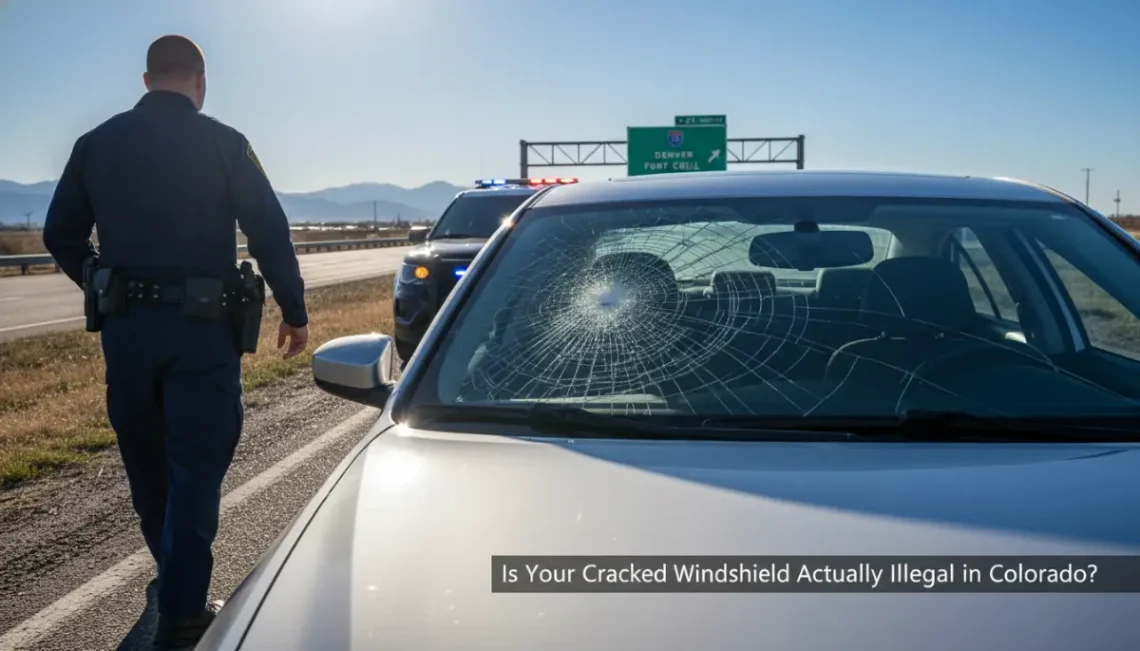
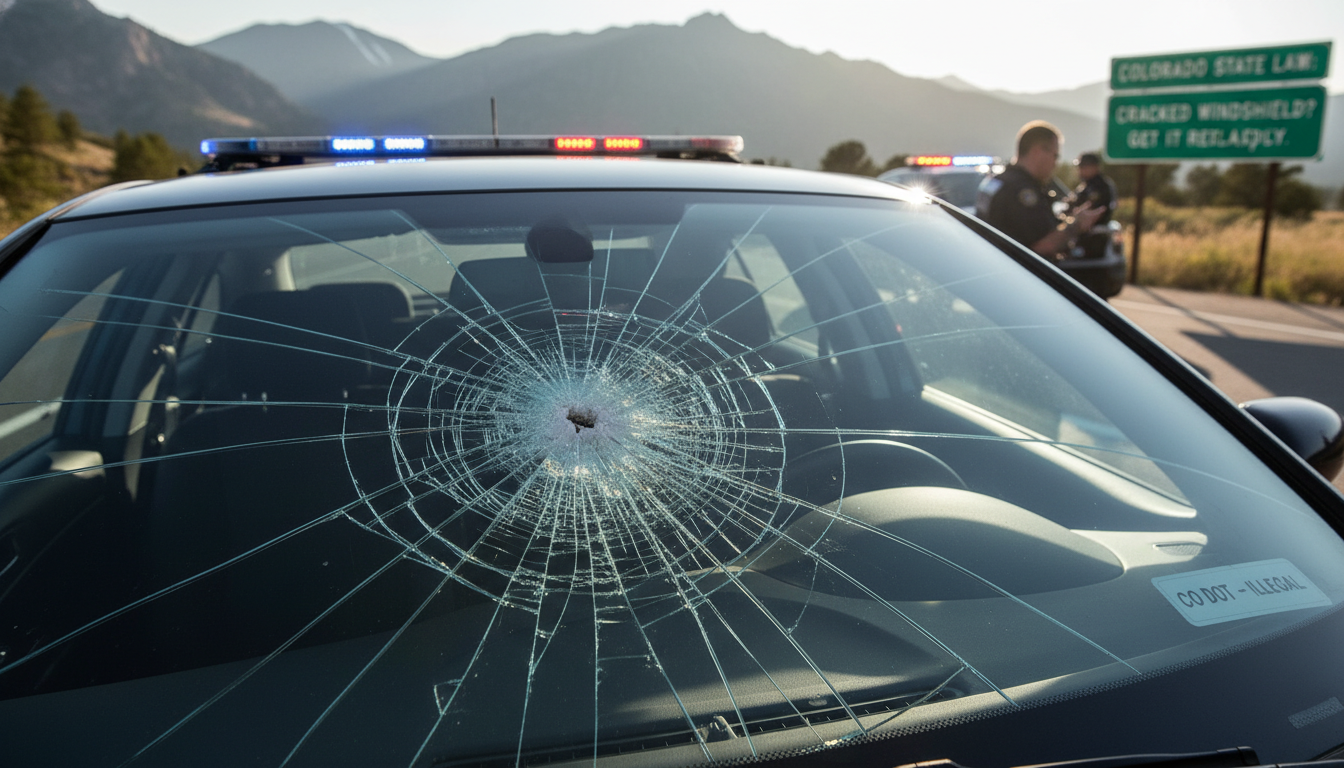
Is Your Cracked Windshield Actually Illegal in Colorado? This is a question that thousands of Front Range drivers ask themselves every year, especially after a winter of heavy gravel and rapid temperature fluctuations. In the state of Colorado, driving with a damaged windshield isn’t just a nuisance or a cosmetic flaw; it can potentially lead to legal trouble and safety citations. Understanding the nuances of Colorado windshield laws is essential for every vehicle owner from Denver to Aurora.
Colorado is famous for its rugged terrain and unpredictable weather, both of which contribute to one of the highest rates of windshield damage in the United States. Between the magnesium chloride used on winter roads and the loose gravel common on I-70, your glass is constantly under siege. However, the line between a minor chip and a legally prohibited obstruction can be thin. To help you navigate these literal and legal cracks, we have compiled a comprehensive guide to the regulations, risks, and solutions associated with auto glass in the Centennial State.
The Legal Framework: Colorado Revised Statute 42-4-201
The primary law governing vehicle equipment in our state is found in the Colorado Revised Statutes (CRS). Specifically, CRS 42-4-201 outlines the requirements for obstruction of a driver’s vision. While the statute does not explicitly list the word “crack” in every subsection, it provides the broad legal authority for law enforcement to issue a cracked windshield ticket Colorado drivers often dread. The law states that no person shall drive any motor vehicle with any sign, poster, or other opaque material upon the front windshield that obstructs the driver’s clear view of the highway.
Law enforcement officers in Aurora and Denver use this statute to determine if a crack has become a safety hazard. If a crack is situated directly in the driver’s line of sight, it is considered an obstruction. This is often referred to as the “acute area” of the windshield—essentially the space directly in front of the steering wheel, measuring roughly 8.5 by 11 inches. If a chip or crack exists within this zone, you are much more likely to be pulled over and cited under Colorado Revised Statute Title 42.
Beyond the primary view, the law also addresses the overall structural integrity of the vehicle. If a crack is so extensive that it reaches from one edge of the glass to another, it may be viewed as a violation of safety standards. Even if it isn’t directly in your line of vision, a large “edge crack” can compromise the strength of the windshield, which is a critical component of your car’s safety cage during a rollover accident.
Defining Obstructed Vision Laws CO
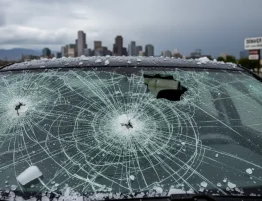
When discussing obstructed vision laws CO residents need to understand that “obstruction” is often at the discretion of the officer. Unlike some states that have very specific measurements (e.g., a crack longer than 12 inches), Colorado’s language is more subjective. An officer will look at whether the damage interferes with your ability to see pedestrians, other vehicles, or traffic signals. If a spiderweb crack reflects sunlight directly into your eyes, that is a clear-cut case of obstructed vision.
Furthermore, the law applies to anything that might hinder the driver’s view. This includes not just cracks, but also snow, ice, or even poorly placed GPS mounts and dangling air fresheners. However, cracks are the most permanent and dangerous form of obstruction. Because glass is a structural element of the car, a crack isn’t just a visual barrier; it’s a point of failure. In the event of a collision, an obstructed or weakened windshield may fail to support the roof or could interfere with the proper deployment of the passenger-side airbag.
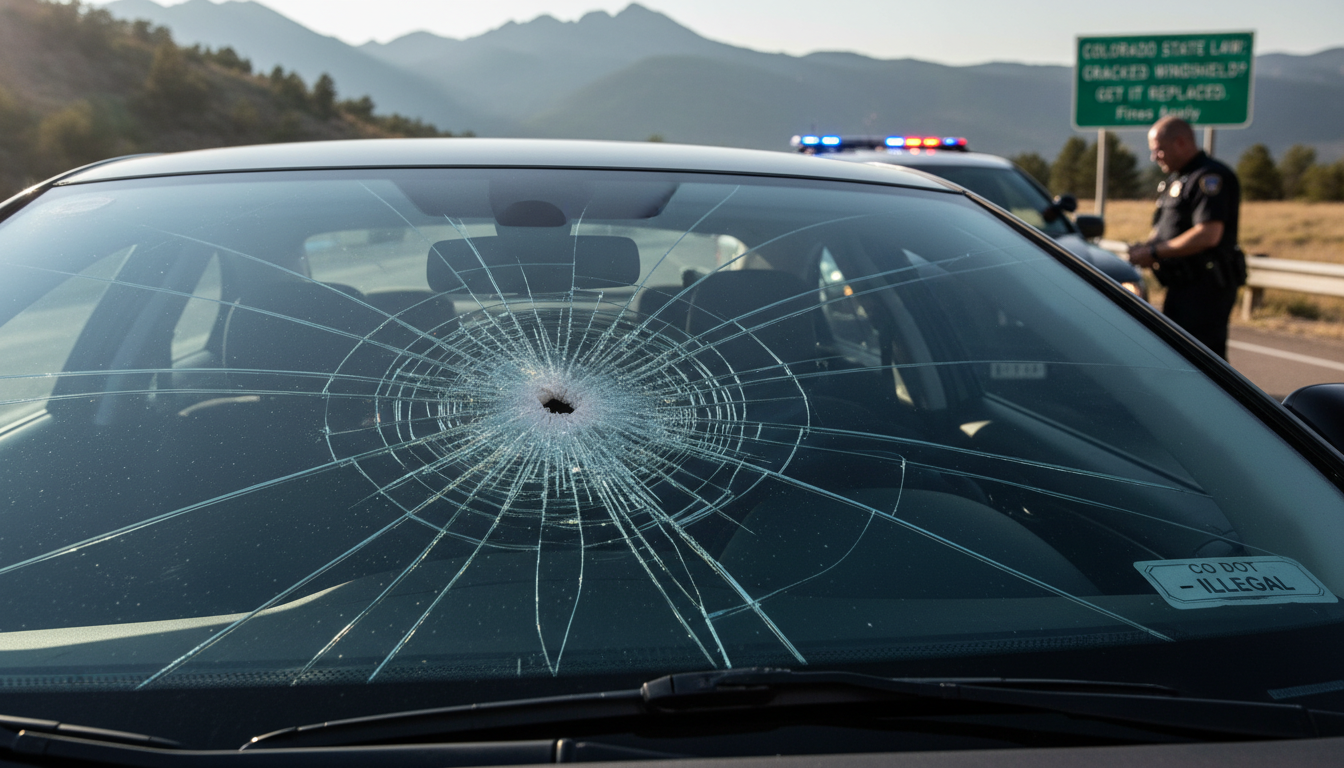
The Three Key Zones of Windshield Damage
To better understand how the law is applied, it helps to divide the windshield into three distinct zones. The first is the Driver’s Primary View (the acute area). Any damage here is almost always considered illegal. Even a small pit that catches the light can be deemed an obstruction. If you have damage here, seeking Aurora auto glass repair should be your immediate priority.
The second zone is the peripheral area, which includes the rest of the glass covered by the windshield wipers. While damage here might not result in an immediate ticket, it is still subject to the “obstruction” rule if the crack is large or branching. The third zone is the “frit” or the black ceramic border of the windshield. Cracks starting here often spread rapidly across the entire surface due to thermal stress, eventually moving into the critical zones.
Consequences of a Cracked Windshield Ticket Colorado
If you are cited for a cracked windshield in Colorado, the consequences are usually classified as a Class B traffic infraction. While this is not a criminal offense, it does carry a fine. The cost of the ticket can vary depending on the municipality—Aurora, Denver, and Lakewood may have slightly different fee structures—but you can generally expect to pay between $50 and $150 including court costs.
The real cost, however, isn’t the fine itself; it’s the “fix-it” requirement. In many cases, an officer may issue a warning or a citation that can be dismissed if you provide proof of repair within a certain timeframe. However, if you ignore the ticket and continue to drive with the damaged glass, you could face higher fines and potentially points on your license if the infraction is bundled with other safety violations. More importantly, if you are involved in an accident and your windshield was documented as being damaged beforehand, it could complicate your insurance claim or even lead to liability issues.
The Technical Role of ADAS in Modern Windshield Legality
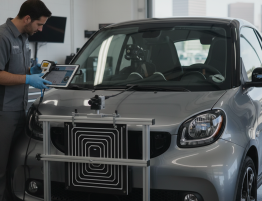
Modern vehicles have introduced a new layer of complexity to Colorado windshield laws. Most cars manufactured in the last five years are equipped with Advanced Driver Assistance Systems (ADAS). These systems rely on cameras and sensors mounted behind the upper portion of the windshield to manage features like lane-departure warnings, automatic emergency braking, and adaptive cruise control.
If a crack passes through the area where these sensors are located, your vehicle may technically be “unfit for the road” according to federal safety standards, even if the driver can see perfectly fine. A crack can distort the camera’s view, causing the safety systems to malfunction or shut down entirely. This is why professional shops emphasize auto glass calibration after any replacement. Without proper calibration, your car’s safety tech is essentially blind, which poses a significant risk on high-speed Colorado highways.
When your ADAS system is compromised, it’s not just about a ticket from the police; it’s about the vehicle’s inability to protect you. Many local jurisdictions are beginning to look at whether malfunctioning safety tech due to glass damage constitutes a secondary violation. For Colorado drivers, this means that a small crack near the rearview mirror is no longer something that can be ignored.
Why Colorado is the Capital of Windshield Cracks
It is no coincidence that Colorado has so many auto glass shops. Our environment is a perfect storm for glass failure. First, there is the altitude. At higher elevations, the atmospheric pressure changes, and the UV radiation is more intense. This doesn’t directly crack the glass, but it can weaken the PVB (polyvinyl butyral) interlayer that holds the two sheets of glass together in a laminated windshield.
Second, we have extreme temperature swings. It is not uncommon for a winter day in Aurora to start at 10 degrees and hit 55 degrees by the afternoon. This rapid expansion and contraction of the glass cause small, invisible chips to blossom into massive cracks overnight. This phenomenon, often called “thermal shock,” is the leading cause of why a small rock chip suddenly spans the entire width of the dashboard.
Finally, the road debris in Colorado is unique. Because of our environmental regulations, many municipalities use crushed squeegee or gravel instead of pure salt. While this is better for the ecosystem and reduces rust on car frames, it turns our highways into shooting galleries for small rocks. Every time a semi-truck merges onto I-25, it sends a shower of projectiles toward the vehicles behind it. This constant bombardment is why Colorado windshield laws are enforced with a degree of understanding, yet with a firm eye on safety.
Legal vs. Safe: When to Choose Aurora Auto Glass Repair
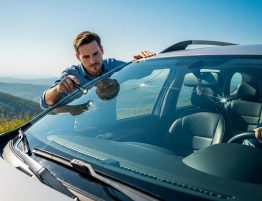
Just because you haven’t been pulled over yet doesn’t mean your vehicle is safe. A common mistake drivers make is waiting until the crack is “big enough” to justify the deductible. However, in the world of cracked windshield repair vs replacement, timing is everything. A small chip (smaller than a quarter) can often be repaired for a fraction of the cost of a full replacement. Once that chip spreads, the structural integrity is gone, and the law becomes much more likely to intervene.
Repairing a chip involves injecting a specialized clear resin into the damaged area. This resin bonds the glass back together and prevents the crack from spreading. This is the most cost-effective way to stay compliant with obstructed vision laws CO enforces. If you wait until the crack is several inches long, the resin can no longer guarantee the strength of the glass, and a full replacement becomes the only legal and safe option.
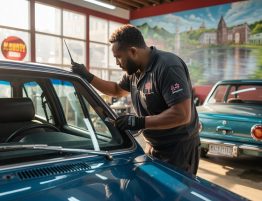
At A+ Auto Glass, we see many drivers who try to use DIY repair kits found at big-box stores. While these can work for very minor pits, they often fail to penetrate deep enough to stop a crack. If a DIY repair fails and the crack continues to grow, you end up needing a full replacement anyway. Professional Aurora auto glass repair ensures that the resin is cured under UV light and vacuum-sealed, providing a permanent fix that satisfies both safety standards and legal requirements.
The Role of Side and Rear Glass
While most of the focus of Colorado windshield laws is on the front glass, the side and rear windows are also subject to regulation. According to CRS 42-4-201, you cannot have any material that is “nontransparent” on the side or rear windows if it obstructs the driver’s view. This is particularly relevant for those who use window tint or those who have shattered side glass and have temporarily taped it up with plastic or cardboard.
Driving with a “bagged” window (a window replaced by plastic and tape) is generally tolerated for a few days, but it can definitely be grounds for a ticket if it obscures your view of your side mirrors or the blind spot. Tempered glass, which is used for side and rear windows, is designed to shatter into tiny, relatively harmless pieces. Once it is cracked, it usually loses all structural integrity immediately, unlike the laminated glass of the windshield. If your side glass is damaged, it should be replaced immediately to ensure the security of the vehicle and your visibility.
Technical Deep Dive: How Auto Glass Protects You
To understand why the law is so strict, we have to look at the engineering of the windshield. A modern windshield is a safety device, not just a window. It consists of two layers of glass with a plastic interlayer (PVB). In a front-end collision, the windshield provides up to 30% of the vehicle’s structural strength. If the windshield is cracked, that strength is compromised. The roof is more likely to collapse in a rollover, and the glass may not stay in the frame during an impact.
Furthermore, the passenger-side airbag is designed to deploy upward and bounce off the windshield toward the passenger. If the glass is cracked and weak, the force of the airbag deployment can actually shatter the windshield and push it out of the vehicle. In this scenario, the airbag will not be in the correct position to protect the passenger. This is the primary reason why a cracked windshield ticket Colorado officers issue is often categorized under “unsafe vehicle” rather than just “obstructed vision.”
Insurance and the “Free Windshield” Myth in Colorado
There is a common misconception that Colorado is a “zero-deductible” state for glass. This is not true. While some states like Florida or Kentucky have laws requiring insurance companies to replace windshields for free, Colorado does not. Whether your repair or replacement is covered depends entirely on your specific insurance policy. Most comprehensive policies cover glass, but you may still be responsible for your deductible.
However, many insurance providers will waive the deductible if the glass can be repaired instead of replaced. This is another reason why acting quickly on a rock chip is beneficial. By opting for Aurora auto glass repair early, you may be able to get the service done for $0 out of pocket, keeping your vehicle legal and safe without a financial burden. Always check with your agent to see if your policy includes a “full glass” rider, which is highly recommended for anyone living along the Front Range.
In conclusion, the answer to “Is Your Cracked Windshield Actually Illegal in Colorado?” is a resounding yes if the damage interferes with your vision or compromises the structural integrity of the vehicle. While the law allows for some minor wear and tear, anything that falls within the driver’s primary line of sight or extends across the glass can lead to a cracked windshield ticket Colorado drivers want to avoid. Beyond the legalities, the safety implications are too significant to ignore. Your windshield is a vital part of your car’s safety system, working in tandem with your airbags and roof structure to protect you in an accident. Between the harsh Colorado elements and the high-tech requirements of ADAS-equipped vehicles, maintaining clear and intact glass is more important than ever. If you notice a chip or a crack starting to spread, don’t wait for a police officer to point it out or for the next temperature drop to turn a small fix into a major replacement. By staying proactive and seeking professional Aurora auto glass repair, you can ensure your vehicle remains legal, your vision remains clear, and your passengers remain safe on every mountain pass and city street. For expert assistance, mobile service, and top-tier safety standards, visit A+ Auto Glass and let our team restore your peace of mind and your view of the beautiful Colorado horizon.