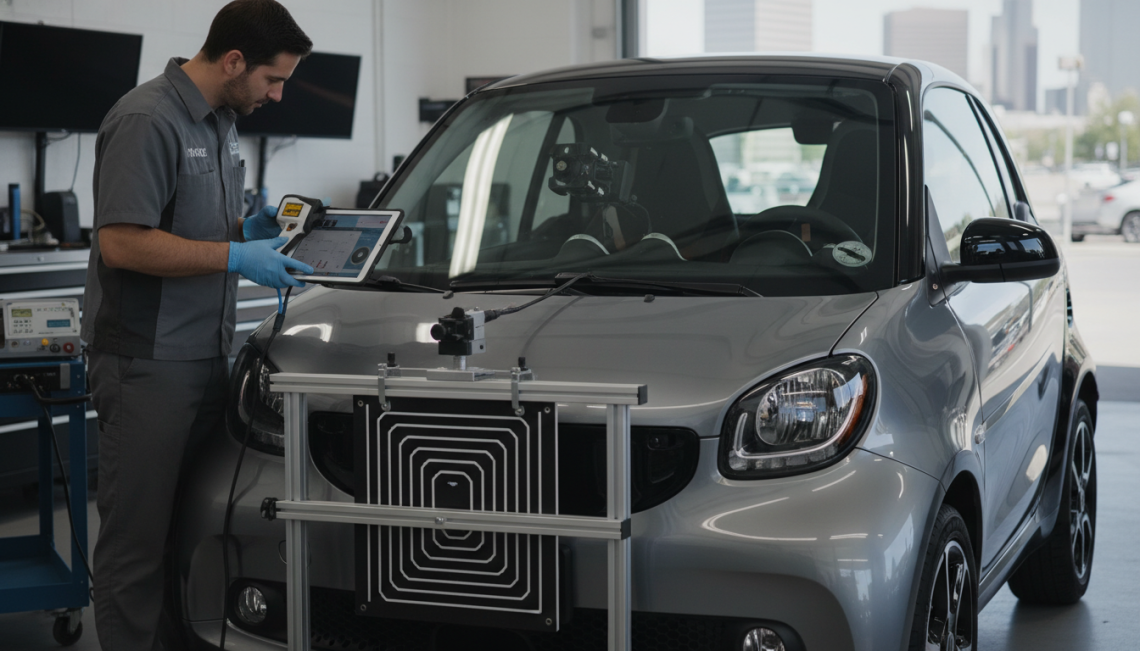
Ensuring your vehicle remains safe on the road starts with professional auto glass calibration Denver services that align your safety sensors with the road ahead. As we navigate the technological landscape of 2026, the complexity of our vehicles has reached an all-time high. What used to be a simple piece of glass is now a sophisticated housing unit for cameras, lasers, and radar systems that dictate how your car responds to danger. In Aurora and the surrounding Denver metro area, the rapid adoption of Advanced Driver Assistance Systems (ADAS) has made windshield maintenance more critical than ever before.
For drivers in Aurora, CO, the unique combination of high-altitude sun exposure, drastic temperature shifts, and heavy highway traffic creates a challenging environment for sensitive automotive electronics. When a windshield is replaced or even slightly jarred, the tiny cameras mounted behind the glass can lose their precise alignment. Even a deviation of a few millimeters can result in a safety system that fails to brake in time or drifts out of its lane. This article explores why professional calibration is no longer optional but a fundamental requirement for modern vehicle ownership.
The Evolution of ADAS: Where We Stand in 2026
By 2026, the automotive industry has shifted from basic convenience features to integrated life-saving technologies. Most vehicles manufactured in the last five years come standard with Level 2 or Level 3 automation. These systems rely on a network of sensors, primarily located behind the windshield, to monitor the environment. This shift has turned local shops into high-tech laboratories where precision is the primary currency.
The National Highway Traffic Safety Administration (NHTSA) has consistently emphasized that as vehicles become more autonomous, the maintenance of their sensing equipment becomes the responsibility of the owner. In Aurora, where we deal with everything from seasonal hail to heavy winter road salt, the physical integrity of the windshield and its accompanying sensors is constantly under threat. Understanding the evolution of these systems helps drivers appreciate why a simple glass swap is no longer a standalone service.
Understanding the Components of Your Smart Car
A modern “smart car” is essentially a rolling computer. The windshield serves as the primary portal for several key technologies. The Forward-Looking Camera (FLC) is the most common component, responsible for reading lane markings and identifying pedestrians. Alongside it, many vehicles use LIDAR or radar systems to measure distances to the car in front of you. When you seek an ADAS windshield service, you are essentially resetting the “eyes” of your vehicle.
These sensors are mounted to a bracket on the interior of the glass. If that bracket is moved—even by the thickness of a few sheets of paper—the camera’s field of view changes. At highway speeds on I-225, a camera that is angled one degree too low might perceive a distant shadow as a solid object, triggering an unexpected and dangerous emergency brake event. This is why smart car glass Aurora specialists focus so heavily on the post-installation calibration phase.
Why Aurora Drivers Face Unique Calibration Challenges
Aurora, Colorado, is not just another suburb; it is a high-plains environment with specific geographic stressors. The elevation in Aurora averages around 5,400 feet, meaning the UV radiation is significantly stronger than at sea level. Over time, intense UV exposure can degrade the adhesives used to mount sensor brackets, leading to subtle shifts in camera positioning. Furthermore, the extreme temperature swings—where it might be 70 degrees at noon and 20 degrees by midnight—cause the glass to expand and contract.
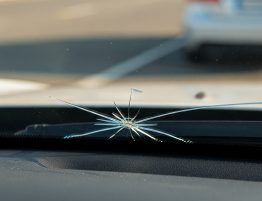
These thermal cycles can actually cause the glass to flex slightly. While this is normal for high-quality automotive glass, it can occasionally push a sensitive sensor out of its narrow operating window. Drivers in the Denver metro area also deal with significant road debris. A small rock chip in the wrong place can obscure a camera’s view, or the impact itself can jar the mounting bracket. Professional safety sensor calibration ensures that regardless of the weather or road conditions, your car’s electronic brain sees the world accurately.
The Technical Process of Auto Glass Calibration
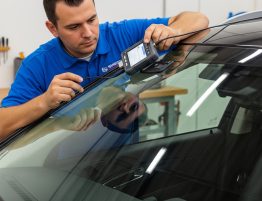
Calibration is not a “one size fits all” process. It involves sophisticated software that communicates with your car’s Engine Control Unit (ECU). When A+ Auto Glass performs an auto glass calibration, we follow strict OEM (Original Equipment Manufacturer) protocols. This process begins by ensuring the vehicle is on a perfectly level surface, the tires are properly inflated, and the fuel tank is at the correct level to ensure the car sits at its intended height.
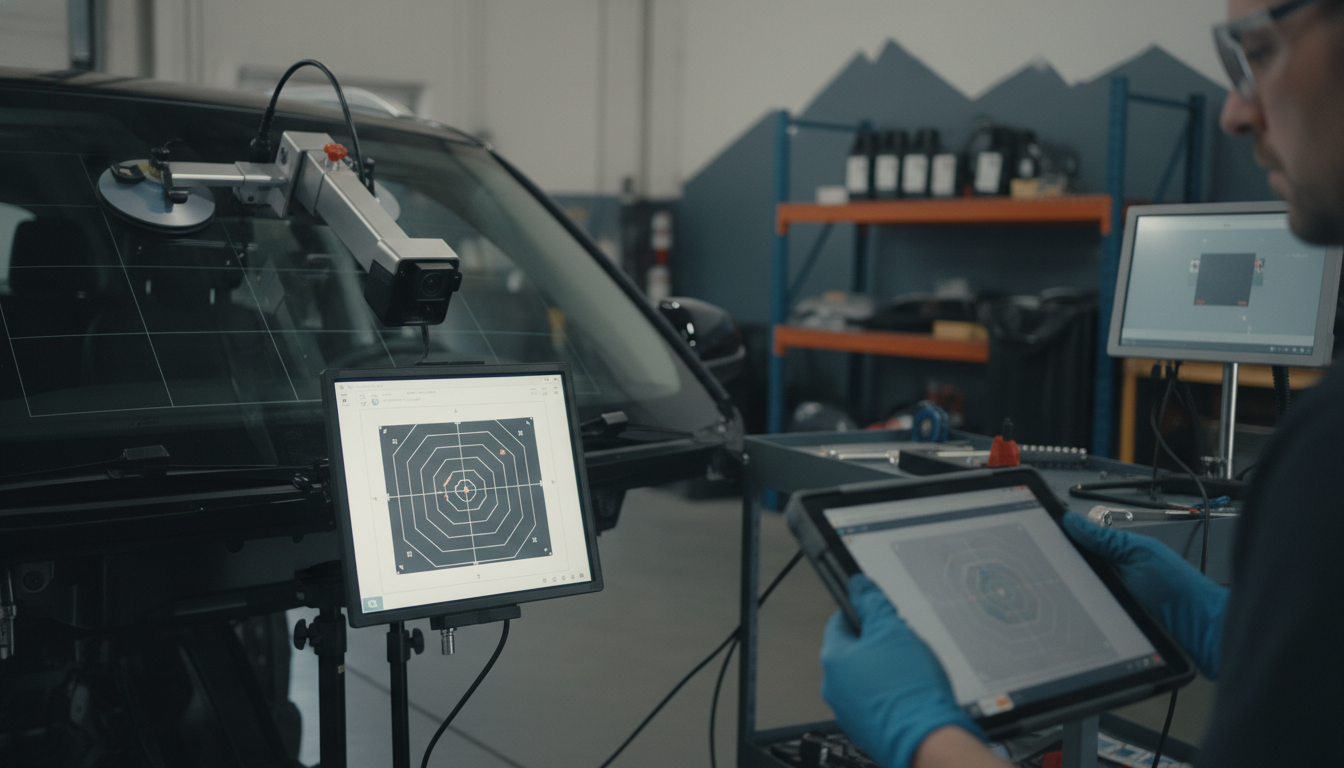
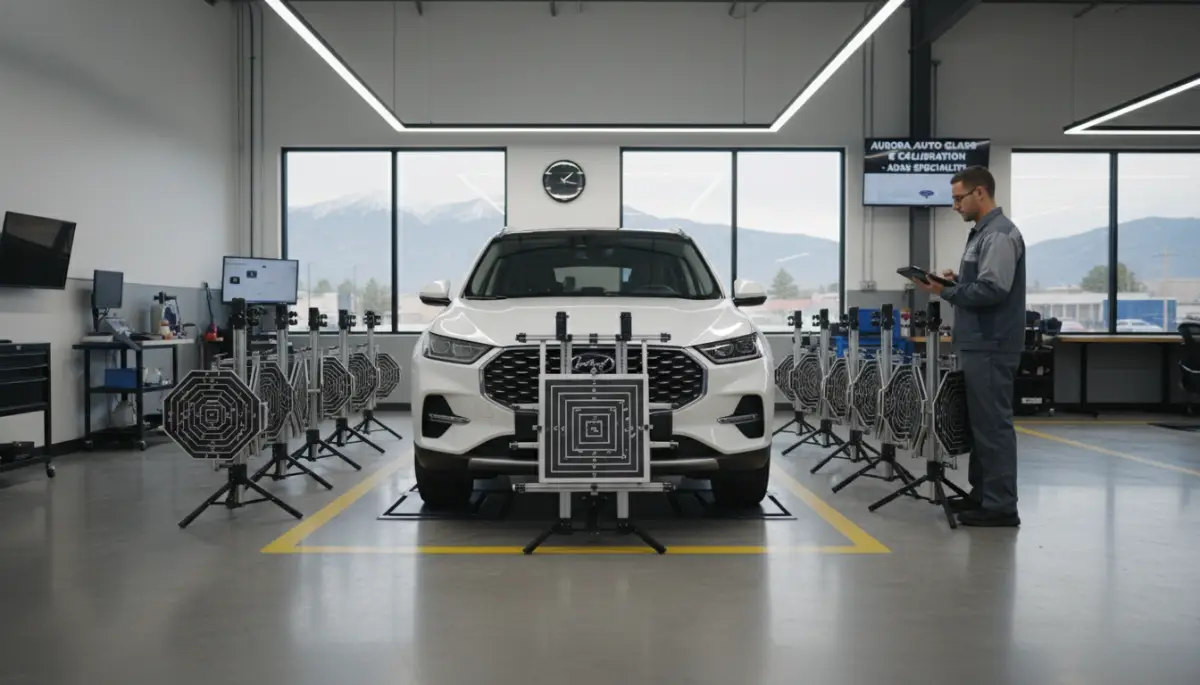
There are two primary types of calibration used in the industry today: Static and Dynamic. Many modern vehicles require both to ensure 100% accuracy. Static calibration involves placing physical targets at specific distances and heights around the vehicle. The car’s onboard computer then “learns” where these targets are and adjusts its internal mapping accordingly. Dynamic calibration, on the other hand, involves driving the vehicle at a set speed on well-marked roads to allow the cameras to orient themselves to real-world infrastructure.
The Physics of Precision
To understand why this is so technical, consider the concept of “parallax error.” If you hold your finger in front of your face and close one eye, then the other, your finger seems to move. Your car’s cameras work on similar principles of geometry. If the camera is not perfectly centered, the triangulation of distance becomes flawed. In the context of auto glass calibration Denver, we use lasers to ensure the vehicle’s centerline is perfectly aligned with the calibration targets.
Modern ADAS systems can detect a pedestrian from over 300 feet away. If the camera is off by just a fraction of a degree at the source (the windshield), that error is magnified over distance. By the time the sensor’s line of sight reaches 300 feet, it could be looking three or four feet to the left or right of where it thinks it is. This is the difference between your car automatically stopping for a child in the street or failing to see them entirely.
Signs Your Sensors Are Out of Alignment
How do you know if your smart car needs help? Sometimes the signs are obvious, but often they are subtle. One of the most common indicators is the “lane keep assist” feeling jerky. If your car constantly bounces between the lines like a pinball rather than staying centered, your camera likely needs a safety sensor calibration. You might also notice that your adaptive cruise control follows cars at an inconsistent distance, or you receive frequent “sensor blocked” warnings even when the glass looks clean.
Another red flag is the failure of automatic high beams. These systems rely on detecting the light from oncoming traffic. If the camera is tilted upward, it might not see the headlights of an approaching vehicle until they are too close, leading to you accidentally blinding other drivers. In Aurora’s busy intersections, like those along Colfax Avenue, these minor glitches can lead to major frustrations or even accidents. If you’ve recently had your auto glass replaced, calibration is a mandatory next step.
The Legal and Insurance Implications in 2026
By 2026, insurance companies have become very strict regarding ADAS maintenance. If you are involved in an accident and it is discovered that your safety systems were disabled or improperly calibrated following a windshield replacement, you could face liability issues. Most modern insurance policies cover the cost of calibration as part of a glass claim because they recognize it as a safety necessity. Skipping this step to save time can result in denied claims later on.
Furthermore, many vehicle manufacturers now state in their owner’s manuals that ADAS features will not function correctly without professional calibration after glass service. From a legal standpoint, ignoring these manufacturer requirements could be seen as negligence. At A+ Auto Glass, we provide full documentation of the calibration process, ensuring that you have a paper trail proving your vehicle meets all factory safety standards.
Choosing the Right Partner for Smart Car Glass Aurora
Not every glass shop is equipped to handle the high-tech needs of 2026 vehicles. Proper calibration requires an investment in specialized hardware and software that many smaller shops simply don’t have. When looking for smart car glass Aurora services, it is vital to ask if the technicians are certified in ADAS procedures. You aren’t just looking for someone who can glue a piece of glass into a frame; you need a technician who understands data packets and optical geometry.
A+ Auto Glass has stayed ahead of the curve by continuously updating our diagnostic tools. We understand that Aurora residents lead busy lives, which is why we offer comprehensive services that handle both the physical replacement and the digital calibration in one appointment. Whether you are driving a brand-new electric vehicle or a late-model SUV, our team ensures that every safety feature is fully operational before you head back out onto the road.
The Role of OEM vs. Aftermarket Glass
One often overlooked aspect of ADAS windshield service is the quality of the glass itself. Not all glass is created equal. OEM glass is manufactured to the exact specifications of the vehicle maker, ensuring that the “optical window” where the camera sits is free of distortions. Aftermarket glass, while often cheaper, can sometimes have slight waves or imperfections in the glass that act like a prescription lens for the camera. This can confuse the sensors and make calibration difficult or impossible.
We always recommend high-quality glass for any vehicle equipped with safety sensors. The clarity of the glass is just as important as the alignment of the camera. If the camera is looking through a “blurry” patch of glass, its reaction time will be slower. In a split-second emergency, that delay is something no driver can afford.
The Future of Calibration: 2027 and Beyond
As we look past 2026, the technology is only getting more integrated. We are beginning to see augmented reality (AR) HUDs (Heads-Up Displays) that project navigation directly onto the windshield. These systems require even more precise calibration because the projected image must align perfectly with the physical road the driver sees. A misalignment of just a few pixels can cause eye strain or lead to navigation errors.
The rise of V2X (Vehicle-to-Everything) communication also means your car will soon be talking to traffic lights and other vehicles in Aurora. This interconnected web relies on your car knowing exactly where it is in space. Maintaining your auto glass calibration Denver standards today prepares you for the even more complex digital infrastructure of tomorrow. Being proactive about your vehicle’s health is the best way to ensure longevity and safety.
Professional Mobile Calibration: Convenience Meets Safety
Many drivers worry that advanced calibration requires leaving their car at a dealership for days. This is no longer the case. At A+ Auto Glass, we bring the expertise to you. While static calibration often requires a controlled shop environment, many aspects of smart car glass Aurora service can be handled through our mobile units. We can perform the initial glass replacement at your home or office and then guide you through the necessary steps to ensure the system is ready for its dynamic calibration drive.
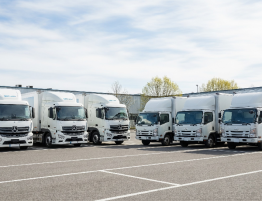
This convenience is especially important for commercial fleets. If you manage a group of service vehicles in Aurora, you can’t afford to have them sitting idle. Our streamlined process ensures that your fleet stays on the road and remains compliant with the latest safety regulations. Keeping your workers safe is not just good ethics; it’s good business.
Common Myths About Windshield Calibration
There are several misconceptions that circulate among car owners. One common myth is that if the “Check Engine” light isn’t on, the sensors are fine. In reality, ADAS sensors can be significantly misaligned without triggering a dashboard warning light. The system might still function, but it functions incorrectly, which is often more dangerous than not functioning at all. Another myth is that you can calibrate the sensors yourself using a smartphone app. This is false; professional calibration requires specialized targets and direct access to the car’s OBD-II port using licensed software.
Finally, some believe that only expensive luxury cars need this service. By 2026, almost every economy car sold in the United States includes some form of ADAS. Whether you drive a compact commuter car or a heavy-duty pickup, if you have a camera behind your windshield, you need safety sensor calibration. Treating this as a luxury rather than a necessity is a gamble with your safety.
In conclusion, the world of automotive maintenance has changed forever, and for residents of Aurora, staying informed is the first step toward safety. Your vehicle’s windshield is no longer just a shield against wind and debris; it is a critical component of a complex safety web that keeps you, your family, and other drivers safe. By prioritizing professional auto glass calibration Denver, you are ensuring that your car’s advanced systems can do exactly what they were designed to do: save lives. Whether it’s the intense Colorado sun or the wear and tear of daily commuting, don’t let your vehicle’s safety features fall out of alignment. Trust the experts who understand the intersection of physical glass and digital precision. If you have any questions about your vehicle’s ADAS or need a consultation for your next windshield service, the team at A+ Auto Glass is here to help. Visit A+ Auto Glass today to schedule your inspection or service and experience the peace of mind that comes with professional, local expertise. Your safety is our priority, and we are committed to keeping Aurora’s smart cars running smarter and safer than ever before.